

Explore West Indies cricket team legends like Viv Richards and Clive Lloyd. View career stats, epic wins, and player .
The Storied Legacy of the West Indies Cricket Team: Dominance, Decline, and the Quest for Revival
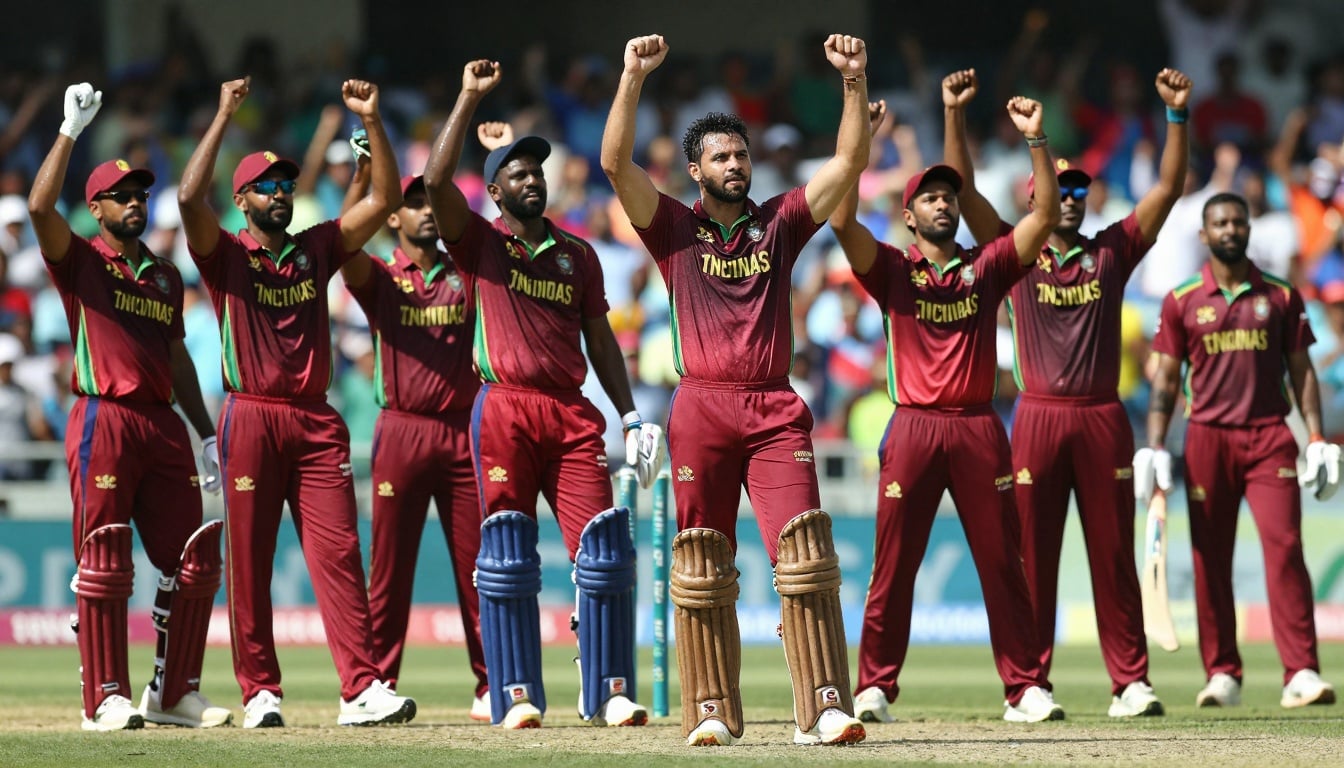
Imagine facing a barrage of thunderbolts from bowlers who could shatter stumps with sheer speed. That's the fear the West Indies cricket team struck in hearts during their peak years. Opponents dreaded the sight of those red jerseys on the field.
The West Indies cricket team, often called the Calypso Cricketers, ruled the game like no other side. From the 1970s to the 1980s, they set records that still stand today. But now, they face tough times in longer formats. This piece traces their Windies history, from cricket dominance to struggles, and hints at a comeback. We'll explore what made them legends and what holds them back.
Section 1: The Golden Era of Unrivaled Dominance (1970s – 1990s)
The West Indies team turned cricket into a spectacle back then. Their style mixed raw power with island flair. Fans worldwide tuned in to watch them dismantle rivals.
The Firepower of the Fast Bowlers
Those pace men formed the backbone of West Indies cricket team success. Andy Roberts led the pack, taking 202 Test wickets at an average under 25. Michael Holding, known as Whispering Death, claimed 249 wickets with his smooth run-up.
Joel Garner towered over batsmen, grabbing 259 wickets in 58 Tests. Malcolm Marshall, the quick learner, snared 376 wickets, the most among them. Then came Curtly Ambrose and Courtney Walsh, who added 405 and 519 wickets respectively in the late era.
In 1984, England's batsmen crumbled against this attack at Lord's. They lost 8 wickets for just 72 runs in one innings. That collapse showed the terror of the Windies pace battery.
Masterful Batting Lineup and Captaincy
Viv Richards smashed runs with fearless aggression, scoring 8,540 Test runs at 50.23. Gordon Greenidge and Desmond Haynes opened with explosive starts, piling up over 6,000 runs together.
Clive Lloyd led with calm authority, guiding the team to World Cup wins. His captaincy built a unit that played without fear. They attacked from ball one, turning chases into celebrations.
Sunil Gavaskar, an Indian great, once said facing that batting line felt like storm clouds gathering. You knew big scores were coming, and fast. Their approach changed how teams played the game.
ICC Trophy Haul and Historical Significance
The Calypso Cricketers lifted the first two World Cups in 1975 and 1979. They beat Australia in both finals, proving their mettle in limited-overs cricket. In Tests, they held the top ranking for 15 straight years from 1980.
An undefeated run of 11 series wins from 1980 to 1995 remains unmatched. They won 29 out of 50 Tests in that stretch. This era defined cricket dominance for the West Indies cricket team.
Their success inspired a generation across the Caribbean. Kids picked up bats dreaming of emulating those heroes.
Section 2: The Structural Foundation: Governing Bodies and Talent Pipeline
Behind the glory lay smart systems that nurtured talent. Boards and local leagues fed players into the big stage. Today, cracks in these foundations hurt the team's progress.
The Role of the WICB/Cricket West Indies (CWI)
Cricket West Indies, once the West Indies Cricket Board, oversees the sport across nations. It unites Barbados, Jamaica, Trinidad and Tobago, Guyana, and others. But funding gaps create uneven support.
Wealthier islands like Barbados get more resources than smaller ones. Governance rows have slowed decisions. In recent years, CWI faced criticism for poor player pay and planning.
These issues ripple to the field. A stable board could boost the West Indies cricket team once more.
Domestic Structure: First-Class Cricket and Player Pathways
The regional four-day tournament, now called the West Indies Championship, was fierce in the golden days. It sharpened skills for Tests. Top players honed techniques there before internationals.
Youth setups linked school cricket to senior levels smoothly. Talents like Brian Lara rose through clear paths. Now, the competition lacks depth, with fewer quality games.
CWI should scout islands harder and invest in academies. Early identification keeps talent local and ready.
- Focus on under-15 trials across all territories.
- Offer scholarships for promising kids.
- Link domestic wins to national contracts.
The Impact of International T20 Leagues
T20 leagues like the IPL draw West Indies stars with big money. Players earn millions abroad, gaining exposure. But it pulls them from Test duties and local games.
This shift boosts skills in short formats. Yet it weakens longer-game prep. Balance is key for all-round growth.
For the Calypso Cricketers, these leagues provide stability. Still, they must not erode the Test tradition.
Section 3: Navigating the Decline: Reasons for the Shift in Power
After 2000, the West Indies cricket team slipped in rankings. Test wins dried up, and ODIs became inconsistent. Multiple factors explain this drop.
Economic Realities and Player Retention
Top talents chase IPL deals over national call-ups. A West Indies contract pays less than half of what franchises offer. Players skip Tours for leagues, leaving gaps in the squad.
This hits Tests hardest, where preparation matters. Youngsters see the pattern and prioritize T20. Money rules choices in modern cricket.
The Test Match Crisis and Identity Loss
From 2000 to 2010, they won just 17 of 105 Tests. That's a 16% win rate, down from 50% in the 80s. Draws fell too, as matches ended in losses.
The old intimidating style faded. New players lacked that fire. Attitude shifted to survival over attack.
Why did the swagger go? Part culture, part coaching gaps.
The Rise of Competing Global Powers
Australia invested in academies, dominating from 1999 to 2007. India poured billions into infrastructure, rising fast. England built county systems that polished pros.
These nations professionalized quicker. West Indies lagged in facilities and coaching. The gap widened over time.
Section 4: The T20 Revolution: A Modern Resurgence in Shorter Formats
In T20, the West Indies cricket team found new life. Their natural energy fits the fast game. Wins here contrast with Test woes.
Back-to-Back T20 World Cup Glory
They claimed the 2012 title in Sri Lanka, beating hosts in the final. Darren Sammy's leadership shone. Then in 2016, at home soil, they defended it against England.
The format suits Caribbean flair—quick feet, big hits. Carlos Brathwaite's four sixes in the last over sealed 2016. It sparked joy across islands.
This success shows their athletic edge in short bursts.
Key T20 Performers and Franchise Influence
Chris Gayle, the Universe Boss, smashed 14,562 T20 runs, including two centuries. His power set the tone. Andre Russell brings all-round fire, with bat and ball.
Sunil Narine spins webs in the middle overs, taking 500+ wickets. Kieron Pollard captains with smarts, scoring 12,000 runs. IPL and Big Bash honed their skills.
These stars lift the team's global profile.
Statistical Snapshot: T20 vs. Test Performance Comparison
In T20Is, West Indies boasts a 50% win rate over 150 matches. They've chased big totals often. Tests? Just 29% wins since 2000 in 250 games.
- T20I wins: 76 out of 152 (as of 2025).
- Test wins post-1995: 45 in 200+ matches.
- Key stat: Gayle's T20 strike rate tops 140, vs. Lara's Test average of 53.
The numbers highlight format strengths.
Section 5: The Road to Revival: Rebuilding the West Indies Legacy
Hope flickers for the Calypso Cricketers. CWI pushes plans to fix issues. Young blood and smart moves could spark a return.
Focus on Test Cricket Consistency
CWI now offers better contracts for Test players. They tie pay to longer-format play. Recent series show promise, like draws against strong sides.
Incentives keep stars committed. Revised schedules avoid league clashes. This builds a core for red-ball fights.
Cultivating New Generations of All-Format Talent
Shimron Hetmyer blends T20 power with Test grit. Jayden Seales bowls with old-school pace at 23. Gudakesh Motie spins like Narine did early.
Domestic leagues spotlight these names. Academies in Jamaica and Barbados groom them. All-format focus prevents T20-only mindsets.
- Watch Seales: 50 Test wickets already.
- Hetmyer: 1,000+ ODI runs by 2025.
- Motie: Emerging left-arm wizard.
Reconnecting with the Diaspora and Fans
CWI runs camps in the US and UK for overseas youth. Social media shares stories of past glories. Fan events build buzz.
Engage with calypso music tie-ins. Host watch parties in cities with Caribbean roots. This reignites passion.
Strong fan base pushes players harder.
Conclusion: Beyond Nostalgia—The Future of Caribbean Cricket
The West Indies cricket team legacy rests on pace attacks, batting flair, and total control. Those elements defined their golden run. Now, the big task is steady play in all formats.
Caribbean talent runs deep—speed, skill, joy. With better funding and youth focus, they can climb back. Picture them challenging for trophies again by 2030. Fans, keep the faith; the Windies history deserves a bright next chapter. What do you think their next big win will be? Share in the comments.


